
Last updated September 25, 2026
Free written scope consultation - allowances, timeline, and change-order rules on paper before a single trade is scheduled
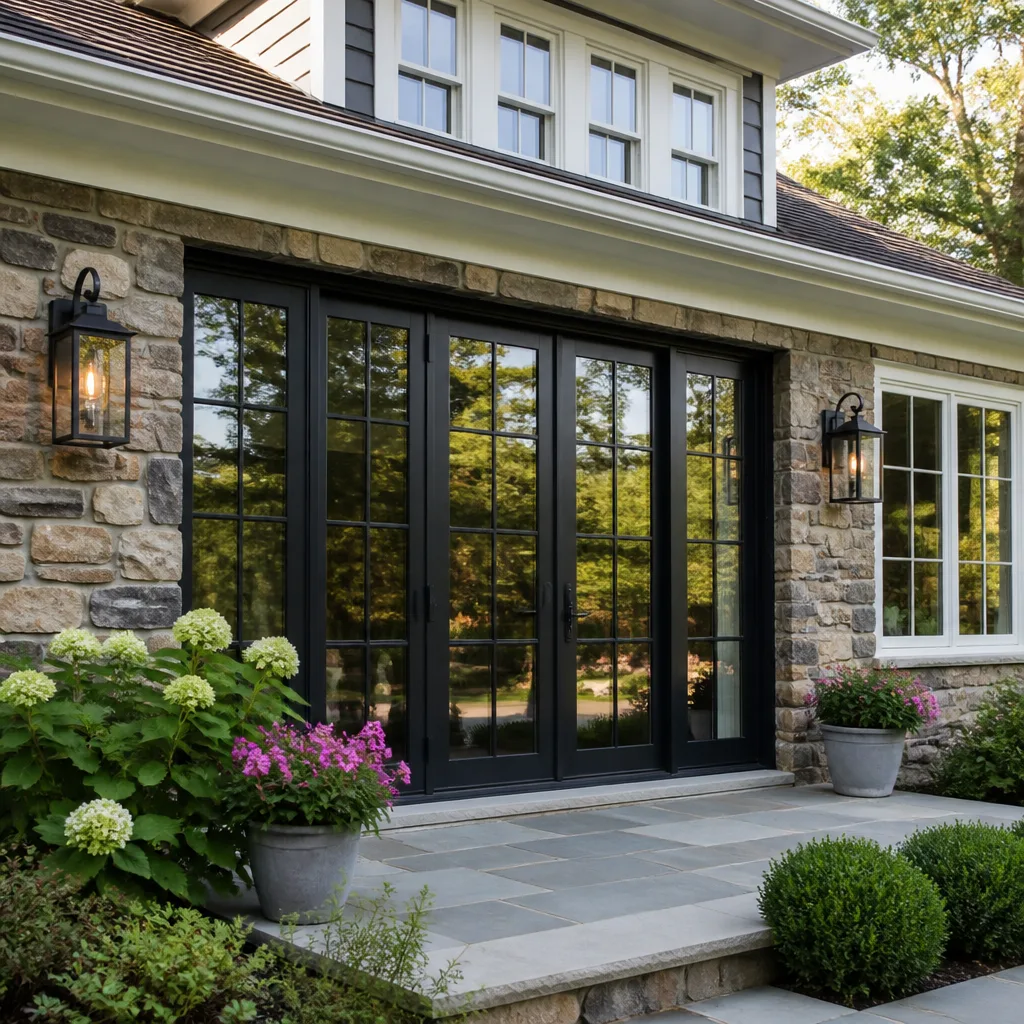
 Before
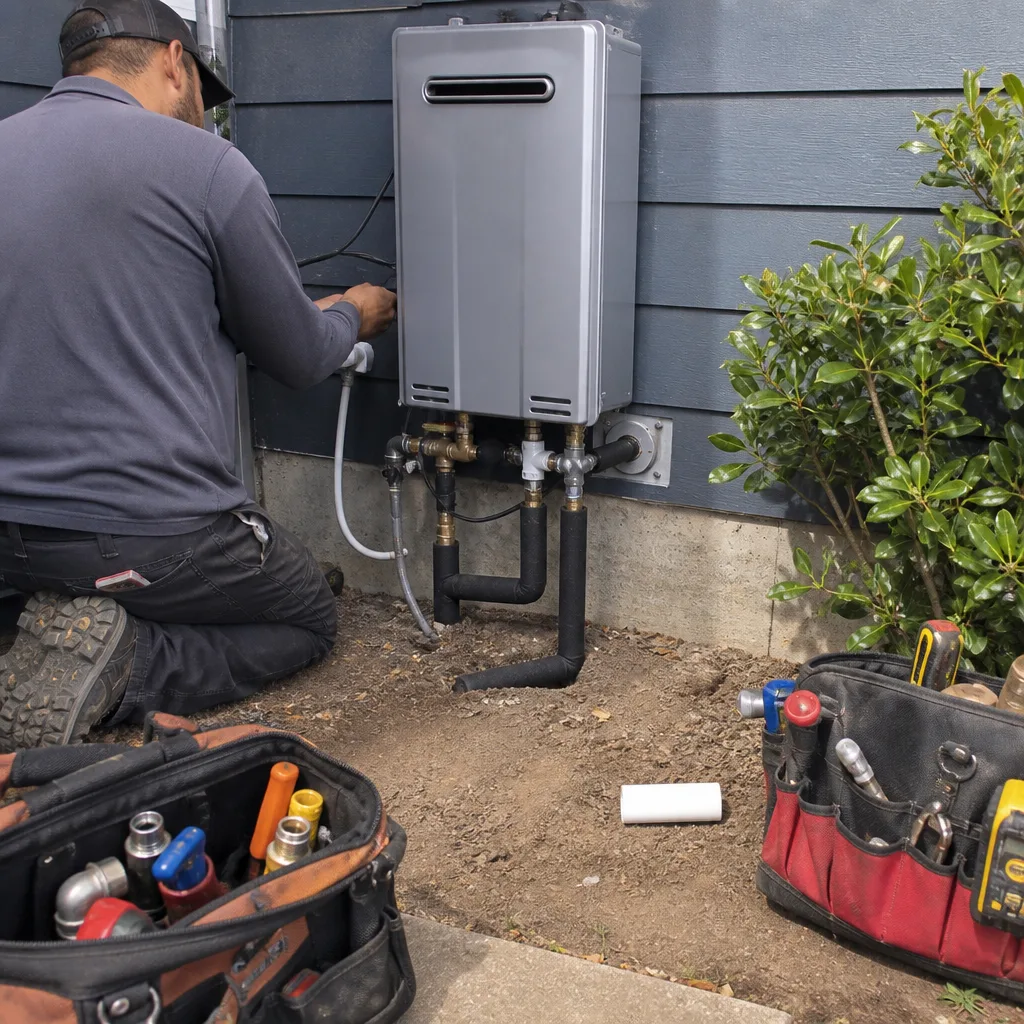 After
After Before
 After
After Before
 After
AfterConstruction Cost Breakdown: The Campbell Homeowner’s Reference for 2026
In Santa Clara County, general contractor overhead and profit typically runs 15-25% of total project cost - a line item that appears in almost no contractor proposal but is present in every one. Most Campbell homeowners discover this only after they’ve signed, when the numbers no longer move. This guide - alongside our more guides & resources - puts every major line item on the page before you enter any negotiation: per-square-foot ranges for kitchen remodels, bathroom additions, ADUs, and room additions; labor rates by trade classification; material tiers from named suppliers; permit fees for Campbell’s specific code requirements; and contingency sizing that matches the age of your home. You’ll learn what a written scope should contain, why allowance line items frequently understate actual costs, and how the signed change-order discipline protects your final number. Everything here is drawn from documented project records, not industry averages.
Quick Answer
Construction costs in Campbell in 2026 range from $275-$450 per square foot for major residential projects, with kitchen remodels averaging $85,000-$165,000, bathroom additions $55,000-$110,000, attached room additions $220-$350 per square foot, and detached ADUs $320-$480 per square foot. Licensed trade labor in Santa Clara County runs $85-$145 per hour depending on classification, and permit fees for Campbell projects add $3,500-$12,000 depending on scope. Projects with a written change-order requirement and signed baseline scope historically finish within 3-7% of the original contract price; projects without this discipline frequently exceed by 15-30%.
Table of Contents
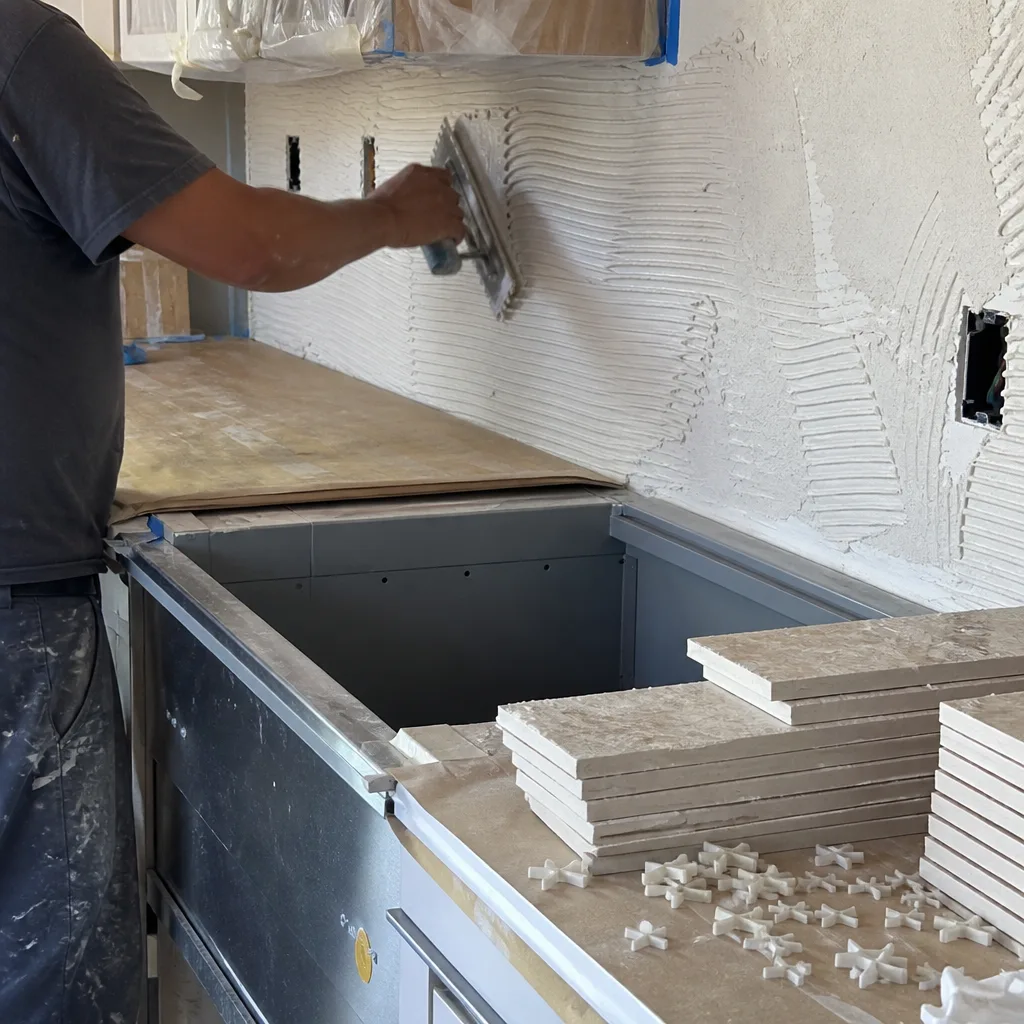
- Kitchen Remodel Costs in Campbell: Line by Line
- Bathroom Addition and Remodel Costs
- ADU Costs in Campbell: Detached vs. Attached
- Room Addition Costs and Structural Considerations
- Santa Clara County Labor Rates by Trade
- Material Tiers and Allowance Traps
- Campbell Permits, Fees, and Timeline
- Contingency Sizing and Change-Order Discipline
 Before
 After
AfterKitchen Remodel Costs in Campbell: Line by Line
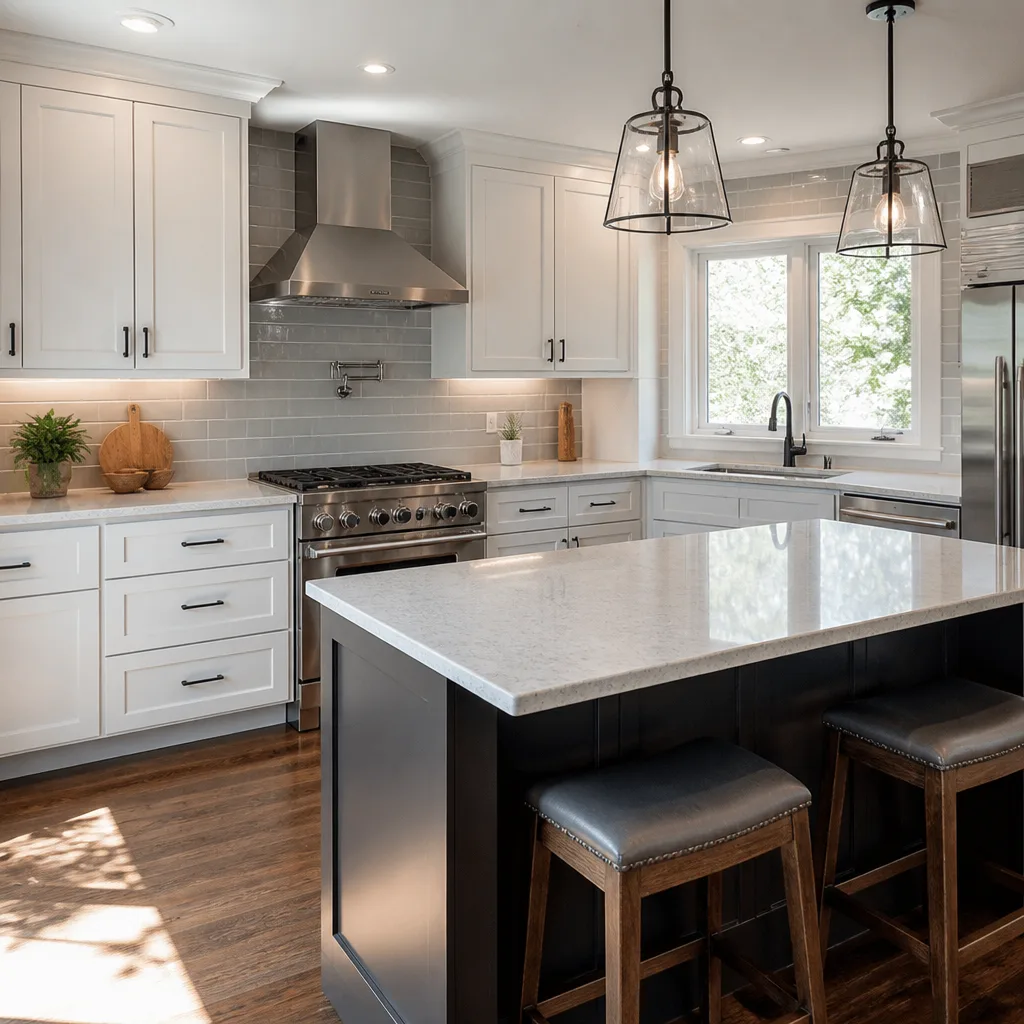
The typical Kitchen Remodeling in Campbell runs $85,000-$165,000 for a 150-250 square foot space in a single-family home built between 1960 and 1995. This range assumes standard ceiling heights, no structural wall removal, and existing electrical service that can handle modern appliance loads. Homes in the Campbell neighborhoods east of Winchester Boulevard - particularly those built during the 1960s and 1970s expansion - frequently require electrical panel upgrades that add $4,500-$8,500 to the base number.
Here’s how that total breaks into documented line items:
- Demolition and disposal: $4,500-$7,500. Campbell’s waste stream requirements mean hazardous materials testing for pre-1978 homes; lead and asbestos abatement, if needed, runs $2,500-$6,000 additional.
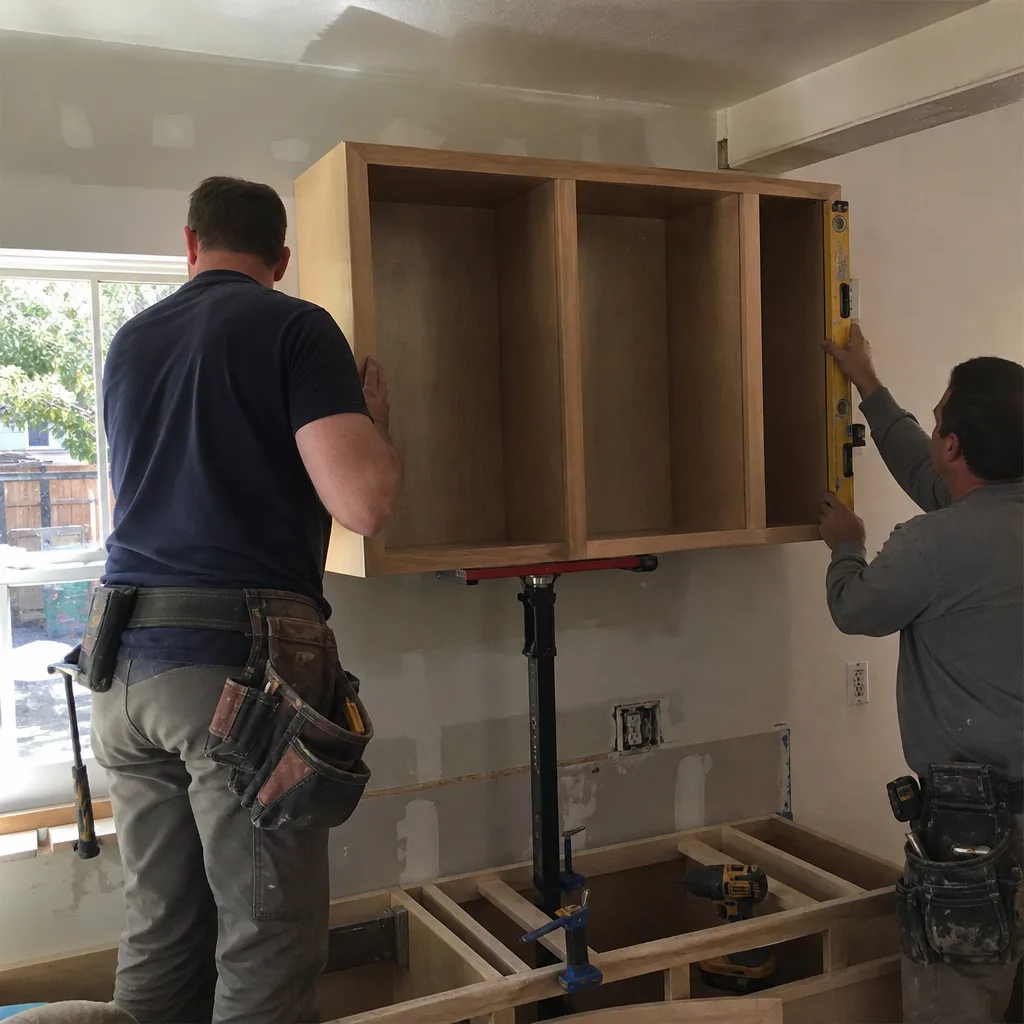
- Cabinetry and installation: $22,000-$55,000. KraftMaid semi-custom lines run $450-$650 per linear foot installed; Wellborn’s Ascent series runs $380-$520 per linear foot. Stock big-box cabinets run lower but rarely fit Campbell’s older wall dimensions without filler strips that waste space.
- Countertops: $4,500-$12,000. Cambria quartz runs $75-$125 per square foot installed; Caesarstone’s standard collection runs $65-$95 per square foot. Exotic or jumbo-slab materials exceed this range.
- Appliances: $8,000-$25,000. This is the most common allowance trap - contractors write $6,000 for appliances, and homeowners select a $14,000 package. The delta comes from your pocket or triggers a change order.
- Plumbing fixtures: $3,500-$8,500. Kohler’s Cruette faucet runs $280-$420; Toto’s Drake II toilet runs $380-$520. Moen’s higher-end lines overlap this range.
- Electrical and lighting: $6,500-$14,000. Recessed LED, under-cabinet task lighting, and dedicated circuits for induction cooktops push the upper end.
- Flooring: $4,500-$9,500. Luxury vinyl plank runs $6-$12 per square foot installed; engineered hardwood runs $10-$18 per square foot.
- Permits and inspections: $3,500-$7,500. Campbell requires electrical, plumbing, and building permits for full kitchen remodels; the city coordinates with Santa Clara County for sewer lateral verification on homes built before 1980.
- General contractor overhead and profit: 15-25% of subtotal. On a $120,000 kitchen, this is $18,000-$30,000. It covers project management, scheduling, warranty reserve, and the 365-Day Done Right Promise.
In our experience across more than 600 kitchen remodels since 2007, the projects that finish within 3-5% of the original contract share one characteristic: the allowance line items were sized to the homeowner’s actual selection tier, not to a theoretical minimum. Under Clause 1 of the Haven Standard, Rowan Construction Group delivers a written price before any work starts - and that price includes allowances sized to the brands named in this section, not placeholder numbers.
Bathroom Addition and Remodel Costs
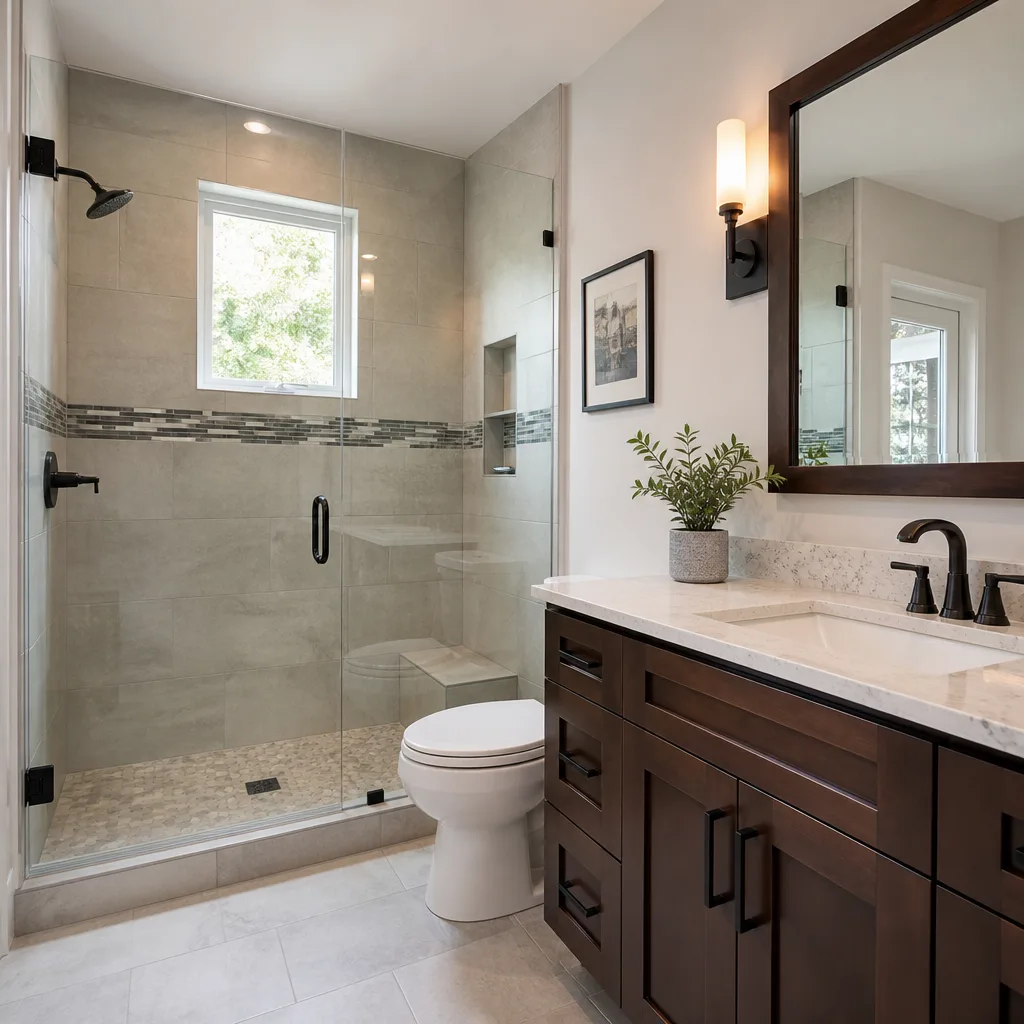
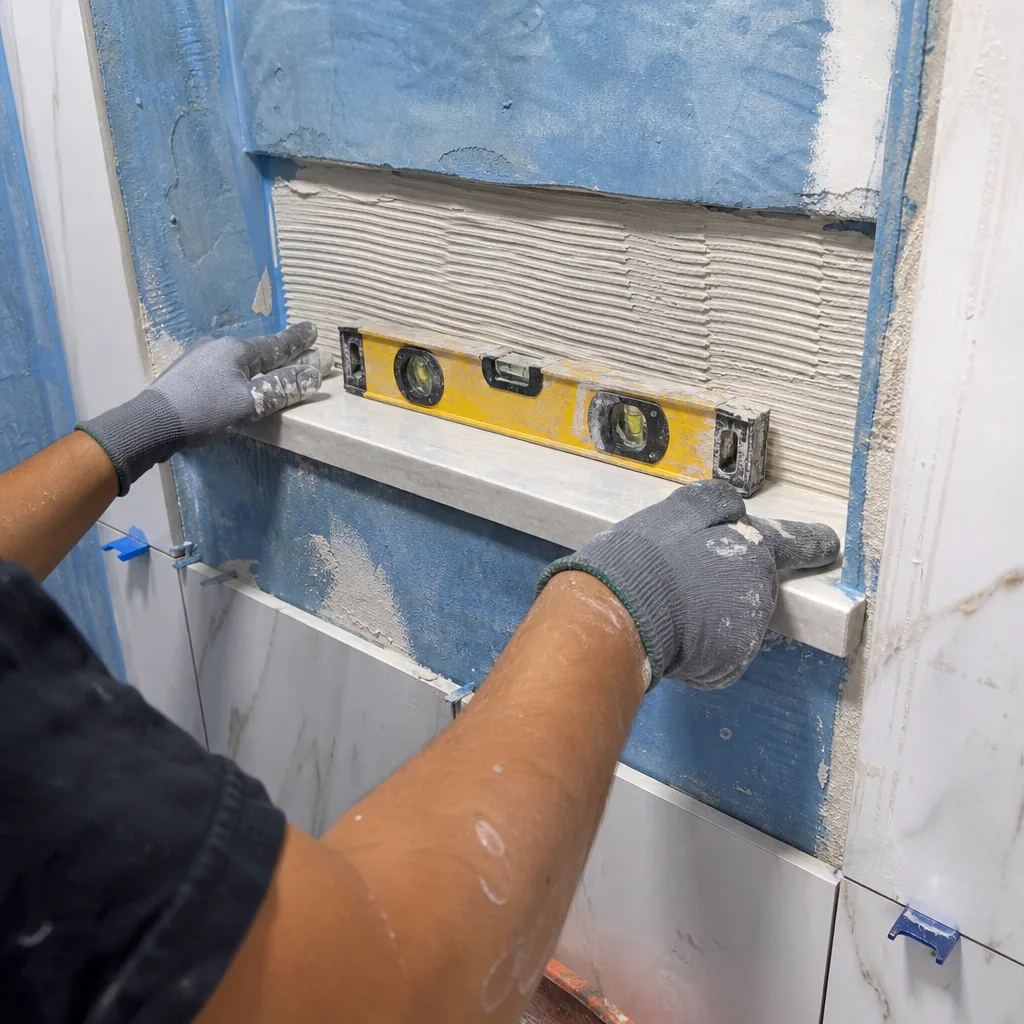
Bathroom Remodeling in Campbell spans two distinct project types with different cost structures: existing bathroom renovation versus new bathroom addition. Renovation of an existing 40-80 square foot bathroom runs $35,000-$75,000. Addition of a new bathroom - requiring new plumbing rough-in, framing, and often foundation work - runs $55,000-$110,000 in Campbell’s market.
The cost divergence comes from infrastructure, not finishes. A renovation reuses existing drain locations and vent stacks. An addition requires:
- New sewer lateral connection or extension - $3,500-$8,500 depending on distance to main and Campbell’s slope requirements for gravity drainage.
- New water supply lines from the meter or nearest manifold - $2,500-$5,500.
- Vent stack extension through roof - $1,500-$4,000; Roofing in Campbell requires matching existing shingle or tile, which adds material cost if the original product is discontinued.
- Framing and foundation - $8,500-$18,000 for slab-on-grade; more if engineered fill is required for Campbell’s clay-heavy soils in the Pruneyard area and neighborhoods near Los Gatos Creek.
For renovations, the finish cost breakdown:
- Wet area (shower/tub): $8,500-$22,000. Curbless showers with linear drains add $2,500-$4,500 for precision framing and waterproofing membrane installation.
- Vanity and countertop: $3,500-$8,500. Quartz vanities run $65-$110 per square foot; solid surface runs $45-$75 per square foot.
- Toilet and bidet: $650-$2,800. Toto’s Washlet-equipped models run $1,200-$2,400; Kohler’s comparable lines overlap.
- Flooring and tile: $4,500-$9,500. Large-format porcelain requires lippage-control systems and experienced setters - labor runs $12-$22 per square foot in Campbell’s market.
- Lighting and ventilation: $1,500-$4,500. Code requires exhaust fans rated for the calculated air volume; humidity sensors add $200-$400.
Campbell’s pre-1980 homes - common in the historic district near Campbell Avenue and in the neighborhoods between Bascom and San Tomas - frequently conceal galvanized steel plumbing and ungrounded electrical. Discovery of these conditions during demolition is not a change-order opportunity; it’s a predictable risk that should be priced into contingency or addressed in pre-construction inspection. We recommend a sewer camera inspection ($350-$550) and electrical panel assessment ($250-$400) before any bathroom project begins.
ADU Costs in Campbell: Detached vs. Attached
Accessory Dwelling Units represent the fastest-growing project type in Campbell’s residential construction market. Santa Clara County’s 2023-2024 zoning liberalization, combined with California’s statewide ADU mandates, has made these projects feasible on most single-family lots. Costs, however, vary dramatically by configuration.
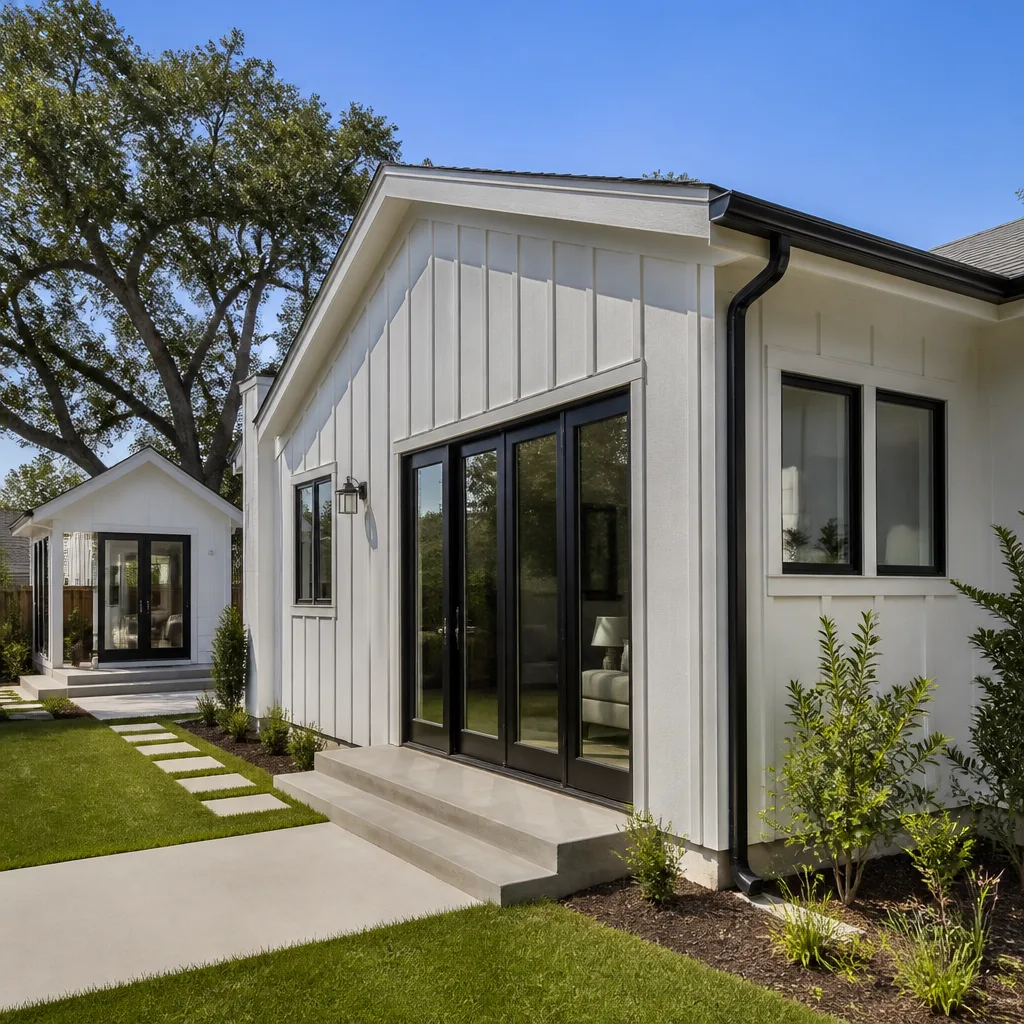
Detached ADU (new construction): $320-$480 per square foot. A 500-square-foot one-bedroom unit runs $160,000-$240,000; an 800-square-foot two-bedroom unit runs $256,000-$384,000. This includes foundation, framing, roofing, MEP (mechanical, electrical, plumbing), finishes, and connection to existing utilities.
Attached ADU (conversion of existing space): $220-$340 per square foot. Garage conversions are the most common, running $85,000-$145,000 for a typical 400-500 square foot two-car garage. The lower per-square-foot cost reflects existing foundation and roof structure, though these must be verified for adequacy.
Key cost drivers specific to Campbell:
- Setback and height compliance: Campbell requires 4-foot side and rear setbacks for detached ADUs; lots in the narrower neighborhoods near Hamilton Avenue may require design modifications that add $5,000-$15,000 in engineering.
- Utility connection fees: San Jose Water Company and PG&E charge separate connection fees for metered ADU service; combined, these run $4,500-$8,500 in Campbell’s service area.
- Fire separation: Detached ADUs within 10 feet of the primary structure require one-hour fire-rated assemblies; attached ADUs require two-hour separation between units. These assemblies add $3,500-$7,500 in material and labor.
- Parking replacement: If a garage conversion eliminates covered parking, Campbell requires replacement parking on the lot - either a new carport ($8,500-$18,000) or demonstrated off-street availability.
The permit timeline for Campbell ADUs runs 4-6 months from application to issuance, including the required neighborhood notification period. This timeline is not negotiable and should be built into any financing or rental income projection. Under the Haven Standard, Rowan Construction Group includes permit expediting as standard project management; the fee is included in overhead, not added as a line item.
Room Addition Costs and Structural Considerations
Attached room additions in Campbell - master suites, family rooms, second-story expansions - run $220-$350 per square foot for ground-level construction and $280-$420 per square foot for second-story additions. The premium for second-story work reflects structural engineering for load transfer, temporary shoring, and the precision required for weatherproofing during phased construction.
A 400-square-foot ground-level master suite addition typically costs:
- Foundation and slab: $18,000-$32,000. Campbell’s soils vary: the alluvial plain near Los Gatos Creek requires less preparation than the clay-dominant hills near the Campbell-Los Gatos border, where engineered fill or pier foundations may add $8,000-$15,000.
- Framing and structural: $22,000-$38,000. Tie-in to existing structure requires careful demolition of existing siding and weather barrier; James Hardie fiber-cement siding, common in Campbell’s 1990s-era construction, requires matching for warranty continuity.
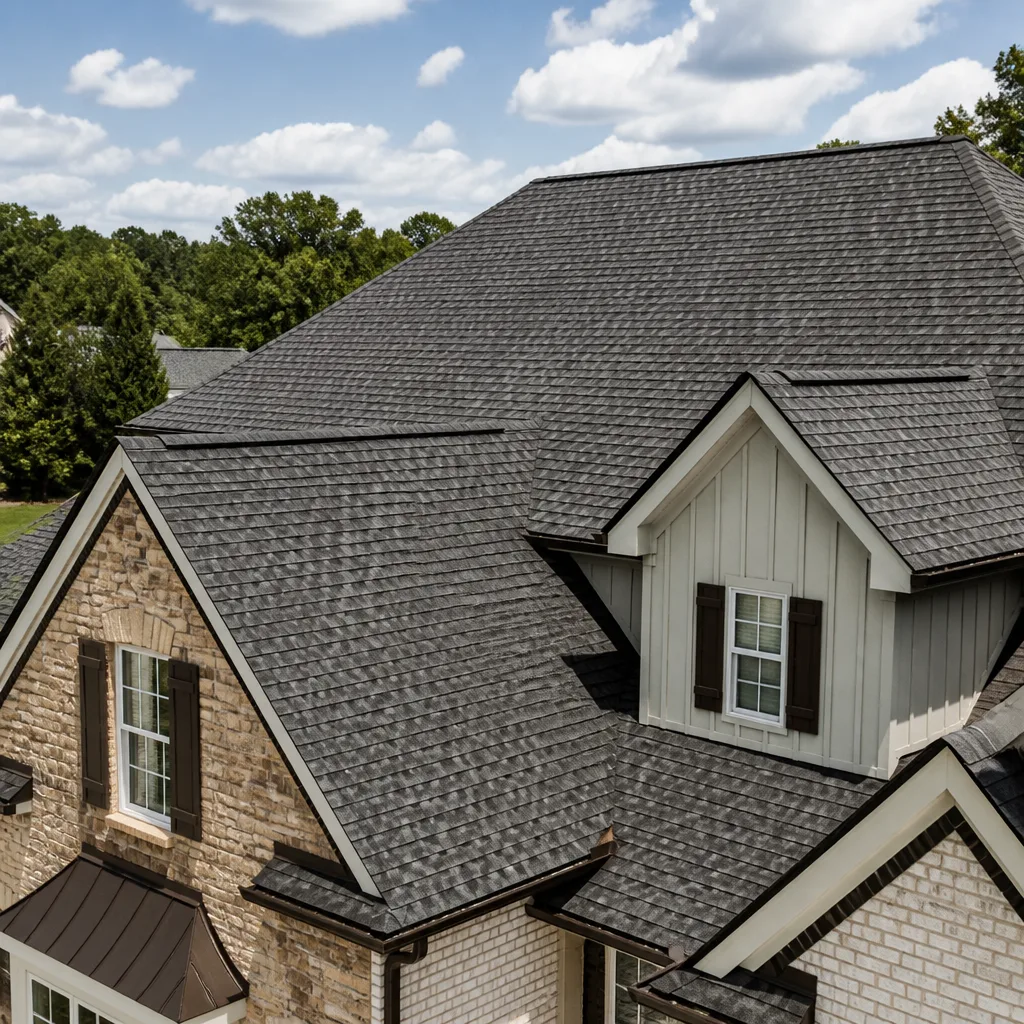
- Roofing: $12,000-$22,000. GAF Timberline HDZ or Owens Corning Duration series are standard in this market; matching existing color and exposure is critical for visual continuity.
- Windows and doors: $8,500-$18,000. Milgard or Andersen products dominate Campbell’s replacement market; folding or sliding door systems for indoor-outdoor living add $5,000-$12,000.
- HVAC extension or upgrade: $4,500-$12,000. Existing systems are frequently undersized for added load; Manual J load calculation is required by code and reveals actual capacity needs.
- Electrical and plumbing: $6,500-$14,000. Panel upgrade probability increases with home age; pre-1990 panels in Campbell are frequently 100-amp service, inadequate for modern additions.
- Interior finishes: $18,000-$38,000. Flooring, paint, trim, fixtures - the visible portion that most homeowners focus on, representing 20-25% of total cost.
Second-story additions carry additional structural complexity. The existing foundation and first-floor walls must be verified for load-bearing capacity; many Campbell homes built in the 1960s and 1970s have 2×4 exterior walls that require sistering or replacement with 2×6 construction for code-compliant insulation and structural adequacy. This verification, performed by a structural engineer ($2,500-$5,500), is not optional and should precede any design commitment.
Santa Clara County Labor Rates by Trade
Licensed trade labor in Santa Clara County runs $85-$145 per hour depending on classification. These rates are not arbitrary; they reflect Workers’ Compensation insurance tiers, prevailing wage requirements for certain project types, and the specialized training required for California’s energy and seismic codes. Any time-and-materials contract should reference these ranges explicitly.
| Trade Classification | Typical Hourly Rate | Common Campbell Applications |
|---|---|---|
| General carpentry / framing | $85-$115 | Structural framing, trim, finish carpentry |
| Licensed plumbing contractor | $110-$145 | Rough-in, fixture installation, gas lines |
| Licensed electrical contractor | $105-$140 | Panel upgrades, circuit installation, EV charging |
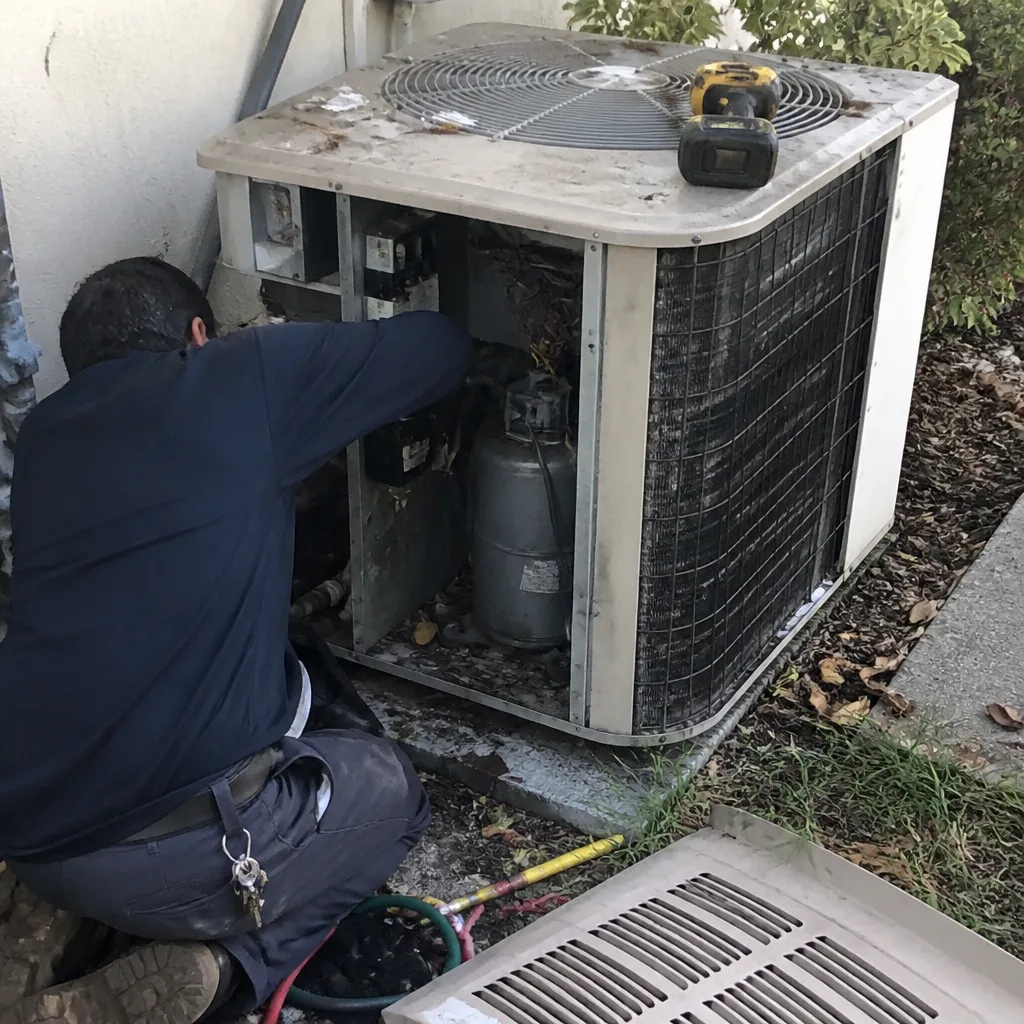
| HVAC technician | $95-$130 | Ductwork, mini-split installation, load calculations |
| Tile setter (specialty) | $75-$110 | Shower waterproofing, large-format installation |
| Roofer (licensed C-39) | $90-$125 | Shingle, tile, flat roof systems |
| Concrete / masonry | $85-$120 | Foundations, pavers, retaining walls |
These rates translate to predictable project costs when paired with documented production rates. A skilled framing crew completes 20-30 square feet of wall framing per hour; a tile setter completes 8-12 square feet of large-format porcelain per hour. Contractors who cannot estimate from these fundamentals are guessing, and their guesses become your change orders.
Under the Haven Standard, Rowan Construction Group’s written quotes specify labor hours by trade, not lump-sum mystery numbers. The customer sees the calculation: 120 hours of electrical at $125 per hour equals $15,000. This transparency is Clause 1 in practice - the price is written before anyone starts, and the math is visible.
Material Tiers and Allowance Traps
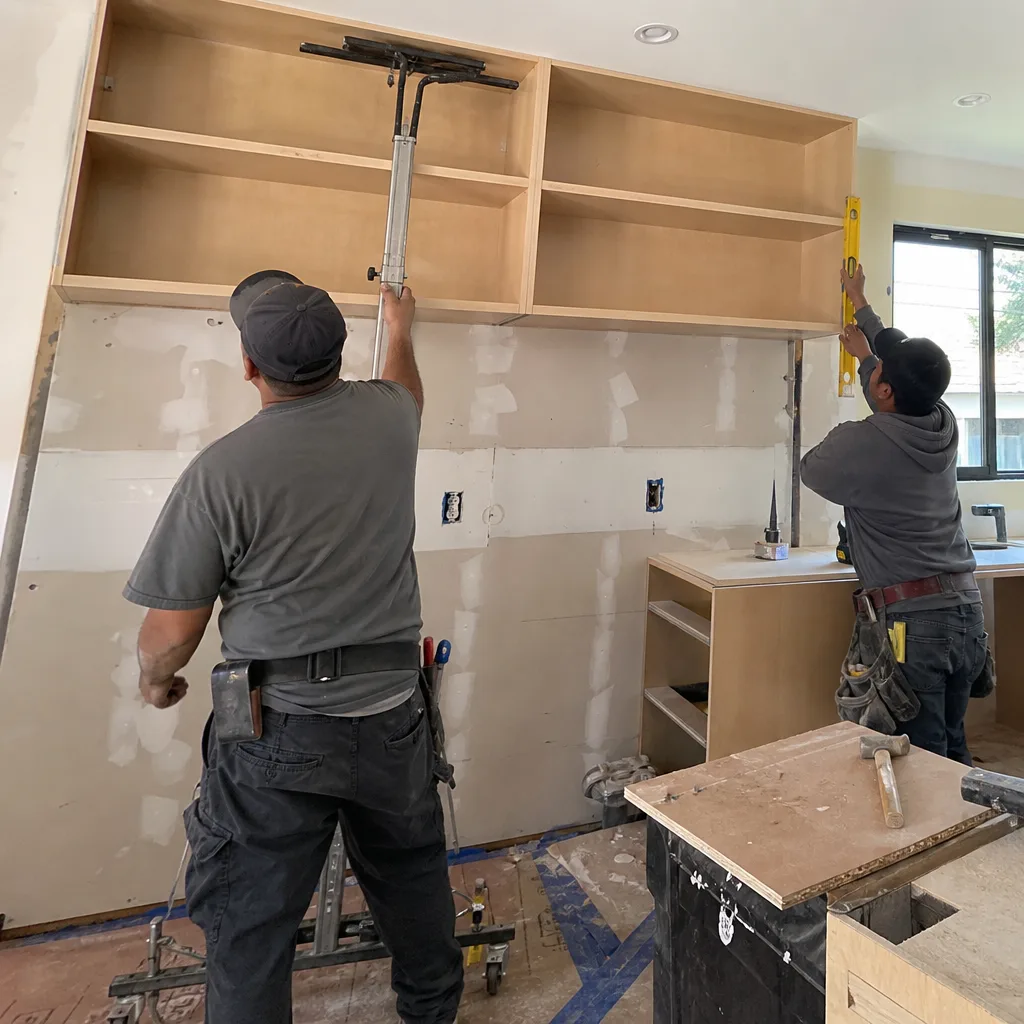
Allowance line items in construction contracts are the most common source of cost overruns. A contractor writes “$6,000 for bathroom fixtures” and the homeowner selects $11,000 worth of product. The $5,000 delta becomes a change order - or a downgrade conversation at the worst possible moment. Here’s how actual material costs vary by tier for products commonly specified in Campbell projects.
Cabinetry:
- Stock (big-box, assembled): $180-$280 per linear foot. Limited sizes, particleboard boxes, 1-year warranty.
- Semi-custom (KraftMaid, Wellborn, similar): $380-$650 per linear foot. Plywood boxes, soft-close hardware, 5-year warranty, custom dimensions in 1/8-inch increments.
- Custom (local millwork): $750-$1,400 per linear foot. Any dimension, any species, lifetime warranty on hardware.
Countertops:
- Laminate: $25-$45 per square foot installed. Functional, dated appearance, 5-10 year lifespan.
- Quartz (Cambria, Caesarstone, Silestone): $65-$125 per square foot installed. Non-porous, consistent pattern, 10-15 year warranty.
- Natural stone (granite, marble, quartzite): $75-$175 per square foot installed. Requires sealing, variation is inherent, premium appearance.
Plumbing fixtures:
- Builder grade (unbranded or entry Kohler/Moen): $80-$180 per fixture. 1-year warranty, plastic cartridges, frequent replacement.
- Mid-grade (Kohler Devonshire, Moen Arbor): $250-$450 per fixture. Ceramic disc cartridges, 5-year warranty, repair parts available.
- Designer (Kohler Purist, Toto Neorest, Moen Align): $500-$2,800 per fixture. Lifetime warranty on finish, integrated technology, commercial-grade construction.
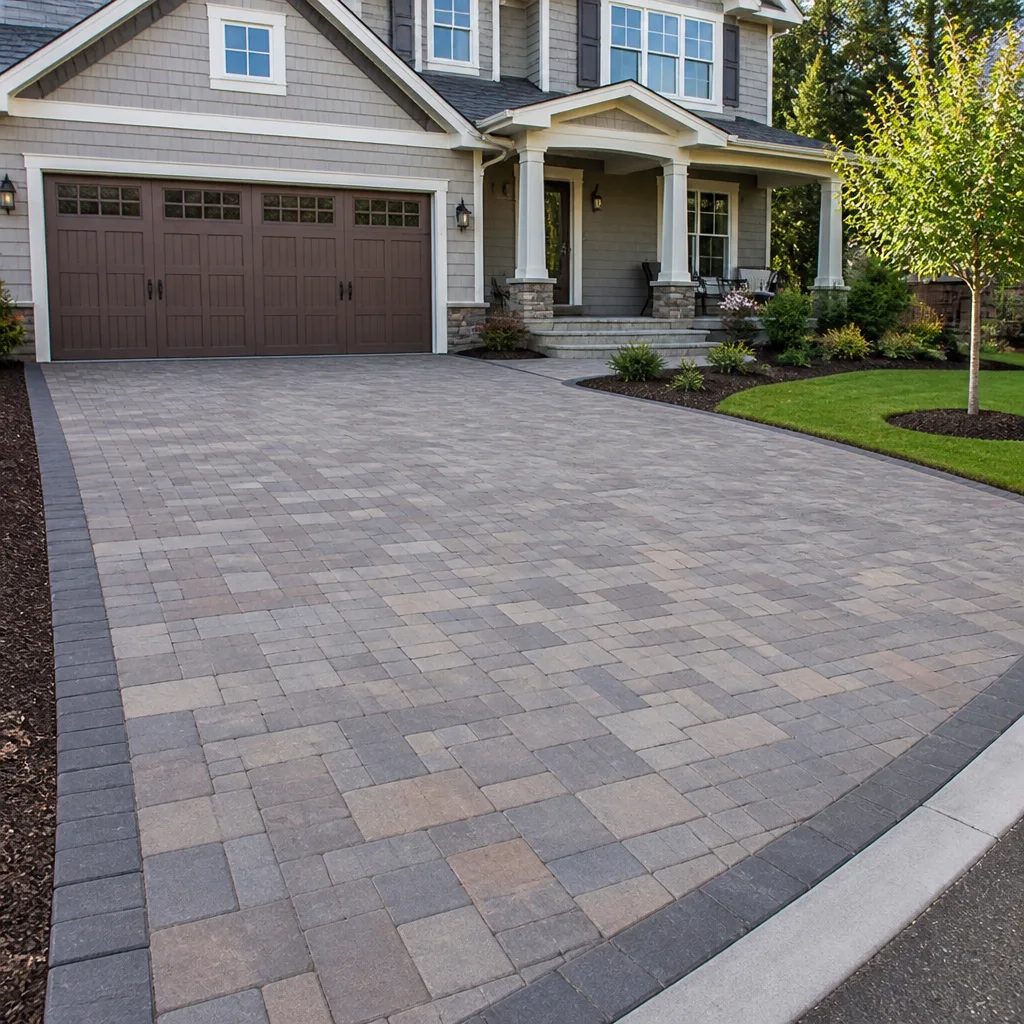
Pavers and hardscape (relevant for Campbell’s outdoor living projects):
- Concrete pavers (Cambridge Pavers, standard collection): $8-$14 per square foot installed. Consistent color, 25-year warranty, suitable for residential driveways and patios.
- Premium concrete (Belgard, Techo-Bloc): $12-$22 per square foot installed. Variegated color, textured surface, permeable options available.
- Natural stone (travertine, bluestone): $22-$45 per square foot installed. Irregular sizing requires skilled installation, premium appearance.
The allowance trap is avoidable. A written quote should specify the tier, not a dollar figure. “Kohler Devonshire or equivalent” is a spec; “$3,000 for fixtures” is a trap. Rowan Construction Group’s quotes name the brand and collection, with an upgrade path documented in writing before construction begins. No surprises, no mid-project downgrades.
Campbell Permits, Fees, and Timeline
Campbell operates under Santa Clara County’s broader building code framework with city-specific amendments. Permit fees are calculated from project valuation, not square footage, which means accurate cost estimation upstream affects permit cost downstream.
Typical Campbell permit fees by project type:
- Kitchen remodel (no structural): $3,500-$6,500. Includes building, electrical, and plumbing permits; mechanical if HVAC is modified.
- Bathroom addition: $4,500-$8,500. Sewer connection verification required; if lateral replacement is triggered, add $2,500-$4,500 in county fees.
- Room addition: $6,500-$12,000. Structural plan check, energy compliance (Title 24), and school facility fees apply.
- Detached ADU: $8,500-$14,000. Separate utility connection fees, fire department access review, and potential traffic impact assessment for larger units.
Campbell-specific timeline factors:
- Plan check queue: 4-8 weeks for residential projects, longer during peak season (March-June).
- Historic district review: Properties within the Campbell Historic District require additional design review; add 3-4 weeks.
- Tree preservation: Campbell’s municipal code protects certain species and sizes; removal or encroachment within protected zones requires arborist report and potential replacement planting.
- Neighborhood notification: ADUs and additions over 500 square feet require mailed notification to adjacent properties; 14-day comment period before hearing scheduling.
Permit expediting is not a bribe or a shortcut; it is professional familiarity with submittal requirements that prevents rejection cycles. Rowan Construction Group’s project managers have processed permits in Campbell since 2007; our submittals include the specific detail sheets and energy calculations that prevent plan-check kickbacks. This is included in overhead, not billed separately.
Contingency Sizing and Change-Order Discipline
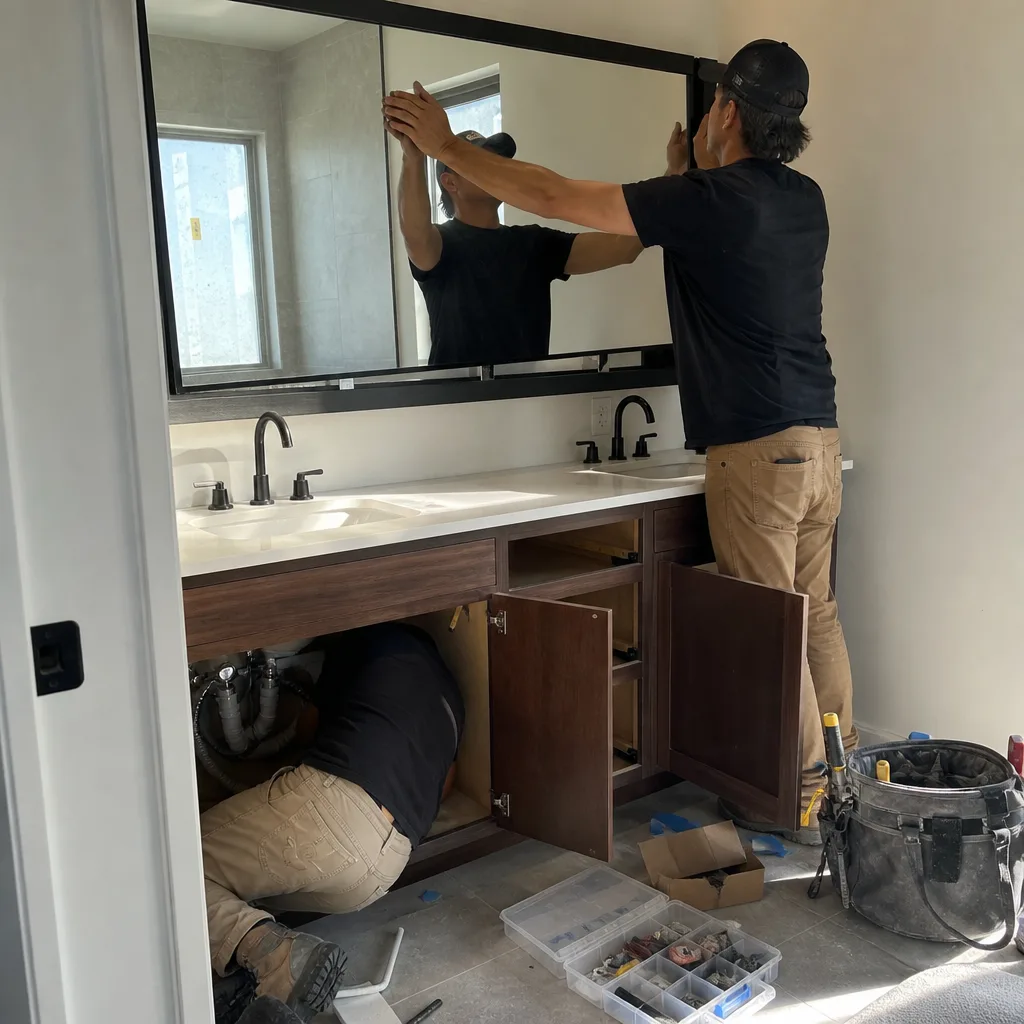
Contingency is not padding. It is a statistically informed reserve for predictable uncertainty. The appropriate size depends on what you know and what you cannot know until demolition begins.
Recommended contingency by home age and project type:
- Pre-1980 home, full remodel: 10-12%. Hidden conditions are more likely: galvanized plumbing, ungrounded electrical, asbestos-containing materials, non-compliant structural modifications from prior owners. In Campbell’s older neighborhoods near downtown and along Bascom Avenue, we regularly find these conditions.
- Pre-1980 home, single-trade project (roofing, windows): 5-8%. Less demolition, more predictable scope.
- 1980-2000 home, any project: 8-10%. Copper plumbing and modern electrical reduce risk; but this era’s construction in Campbell frequently includes unpermitted additions and DIY work that fails current code.
- Post-2000 home, any project: 5-8%. Best documentation, most predictable conditions. Contingency here covers selection upgrades and minor field adjustments, not structural surprises.
A contractor who quotes zero contingency is not offering a better deal. They are either absorbing risk into an inflated base price (which you pay regardless) or planning to recover through change orders (which you pay unpredictably). Neither is transparent.
The signed change-order discipline is the mechanism that keeps contingency intact for genuine unknowns rather than consuming it for scope expansion. Under this discipline:
- Every project begins with a signed baseline scope - every line item, every specification, every allowance tier documented.
- No work proceeds on any change until the change order is signed - the new scope, the new price, the schedule impact, all in writing.
- The customer reviews and approves; the contractor executes; the documentation is filed.
Projects with this discipline historically finish within 3-7% of the original contract price. Projects without it frequently exceed by 15-30%, with the overage concentrated in the final 20% of construction when the homeowner is fatigued and the contractor holds leverage. This is the administrative discipline Haven acquired Rowan for, and it is the reason our 4,000-plus projects have maintained cost control within a few percent of the agreed number.
The 365-Day Done Right Promise applies to the completed project, not the process - but the process discipline makes the promise affordable to keep. If it is not done right, Rowan makes it right. The guarantee is printed on every page and backed by a terms page, not an asterisk.
Common Mistakes to Avoid
- Accepting a ” allowances to be determined” contract. This is not a price; it is a framework for future negotiation. Every allowance should reference a specific product tier, brand, or price-per-unit that can be verified before signing.
- Ignoring the overhead and profit line. In Santa Clara County, this runs 15-25% of project cost. If it is not visible, it is hidden in inflated material or labor rates. Ask for it explicitly.
- Skipping pre-construction inspection on pre-1980 homes. Campbell’s older inventory - particularly in the neighborhoods between Hamilton and Campbell Avenue - conceals conditions that a $400 sewer camera or $300 electrical assessment would reveal. Discovery during demolition costs 3-5x more.
- Undersizing HVAC for additions. Manual J load calculation is code-required and frequently reveals that existing systems cannot handle added square footage. The cost of right-sizing is lower than the cost of callbacks and comfort complaints.
- Assuming permit fees are included in the base quote. Some contractors exclude permits to lower the apparent price; others include them but do not specify the amount. Ask for the line item and the expected timeline.
- Starting work without a signed change-order protocol. Verbal approvals for extras are unenforceable and create the conditions for the 15-30% overruns that plague residential construction.
- Selecting materials without verifying lead time. Custom cabinets, imported tile, and certain window lines carry 12-16 week lead times. A project that starts before materials are on-site incurs labor inefficiency and schedule compression that increases cost.
When to Call a Professional
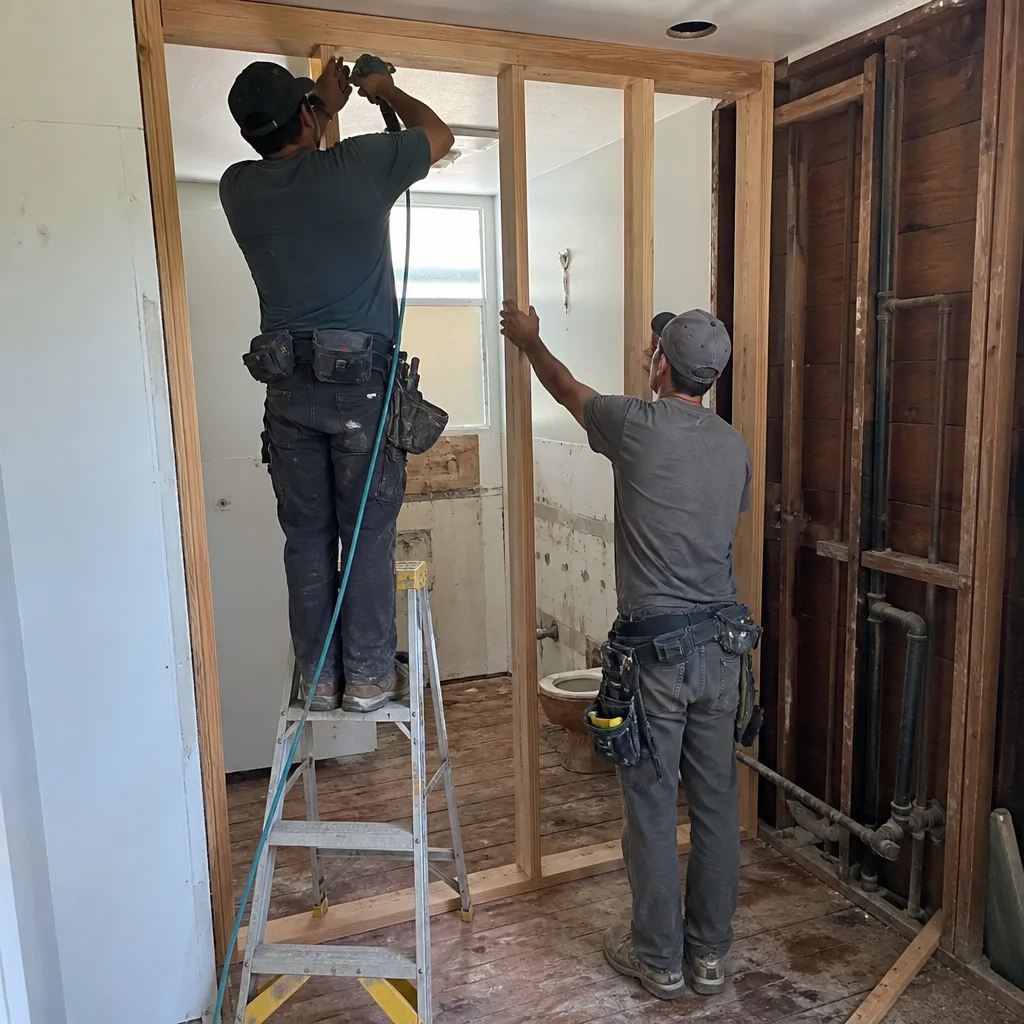
Call a licensed contractor when your project involves structural modification, new plumbing or electrical circuits, or work that requires a building permit - which in Campbell encompasses virtually every project described in this guide and in our Construction Warning Signs: A Campbell Homeowner’s Reference Guide. The threshold for permit exemption is narrow: cosmetic work that does not alter structure, MEP systems, or egress. Painting, flooring replacement, and cabinet refacing typically qualify; everything else does not.
Specific scenarios that warrant immediate professional assessment: sagging floors or rooflines before any addition; frequent electrical breaker trips before kitchen or bathroom expansion; water pressure below 40 PSI before bathroom addition; visible foundation cracks before second-story expansion. These conditions indicate underlying issues that construction will expose and must address.
Rowan Construction Group Campbell offers free estimates in Campbell - call (831) 704-1211. Every estimate includes a written price, a written scope, and a documented photo record of existing conditions. Bring a competitor’s written quote and we will review it line by line at no charge. Under Clause 1 of the Haven Standard, the price is written before anyone starts. Always.
Frequently Asked Questions
Kitchen remodels in Campbell cost $550-$850 per square foot for full renovations including cabinetry, countertops, appliances, and MEP updates. This range assumes standard ceiling heights and no structural wall removal; open-concept modifications requiring beam installation add $150-$300 per square foot. Call (831) 704-1211 for an exact quote based on your kitchen’s dimensions and existing conditions - estimates are free.
Quote variance reflects differences in scope definition, material tier, labor classification, and overhead structure. A quote with $6,000 appliance allowance versus $14,000 actual selection creates $8,000 of hidden variance. A quote with unlicensed labor at $45 per hour versus licensed contractors at $125 per hour creates risk that may materialize as failed inspection or warranty denial. The lowest quote is rarely the most complete quote. Rowan Construction Group’s written quotes specify every line item, every brand, and every hour - no hidden tiers.
Yes. Campbell requires building, electrical, and plumbing permits for any bathroom remodel that modifies fixtures, wiring, or drainage. Cosmetic work - painting, vanity replacement using existing connections, flooring - may qualify for exemption, but most projects trigger permit requirements. Permit fees run $3,500-$7,500 for typical bathroom renovations. Rowan Construction Group includes permit management in project overhead; the fee is not added as a surprise line item.
A detached ADU in Campbell typically takes 8-14 months from permit application to certificate of occupancy: 4-6 months for permit issuance (including plan check and neighborhood notification), 4-8 months for construction depending on size and complexity. Attached ADU conversions run shorter: 6-10 months total. These timelines are not compressible through contractor effort alone; they reflect city processing and inspection scheduling. Rowan Construction Group’s project management includes permit expediting to prevent submittal rejections that add weeks.
The price should not change for the scope you signed. Under Rowan Construction Group’s change-order discipline, no work proceeds on any modification until the change order is signed - the new scope, the new price, the schedule impact, all documented. This is the discipline that has kept projects within a few percent of the agreed cost across 4,000-plus jobs. Projects without this discipline frequently exceed by 15-30%. The written price before work starts is Clause 1 of the Haven Standard.
A valid construction quote contains: line-item breakdown by trade or phase; specific material brands and model numbers or equivalent tier; labor hours by classification with hourly rates; permit fees with jurisdiction named; overhead and profit as a separate percentage; contingency amount and trigger conditions; payment schedule tied to verifiable milestones; warranty terms with duration and scope; and a change-order protocol with signature requirement. Anything less is not a quote; it is an estimate of uncertain reliability. Rowan Construction Group delivers all of these elements in every written price.
The Bottom Line
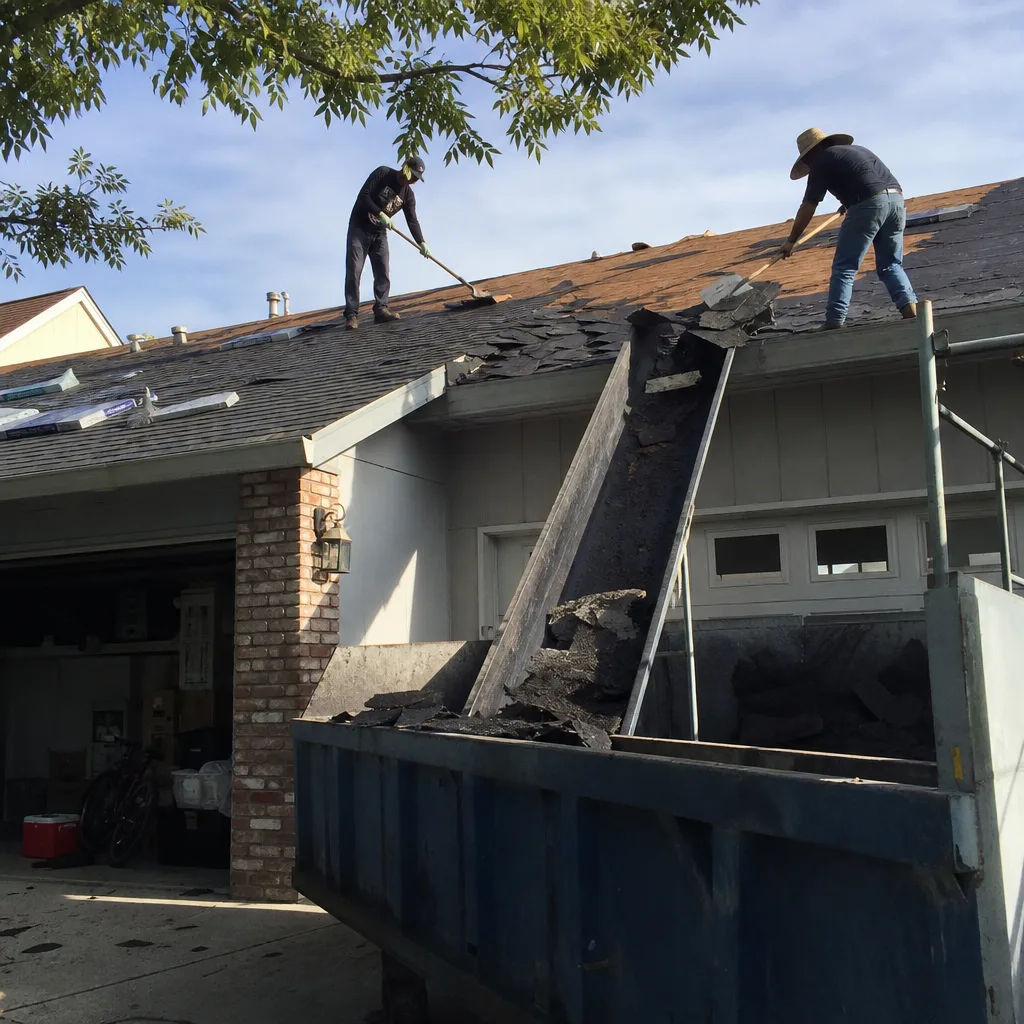
Construction costs in Campbell in 2026 are knowable before you enter any negotiation. Kitchen remodels run $85,000-$165,000; bathroom additions $55,000-$110,000; attached room additions $220-$350 per square foot; detached ADUs $320-$480 per square foot. Licensed trade labor runs $85-$145 per hour. Permits add $3,500-$12,000 depending on scope. Contingency should be 8-12% for pre-1980 homes, 5-8% for newer construction. The contractor who puts these numbers in writing before work starts - with specific brands, documented hours, and a signed change-order protocol - is the contractor whose projects finish within 3-7% of the original price. The one who does not is selling uncertainty at your expense. Documentation is the difference.
Written by Grant Rowan, Owner at Rowan Construction Group Campbell, serving Campbell since 2007.