
Free written scope consultation - allowances, timeline, and change-order rules on paper before a single trade is scheduled
 Before
 After
After Before
 After
After Before
 After
AfterJames Hardie Kitchen Remodeling: The Campbell Owner’s Guide
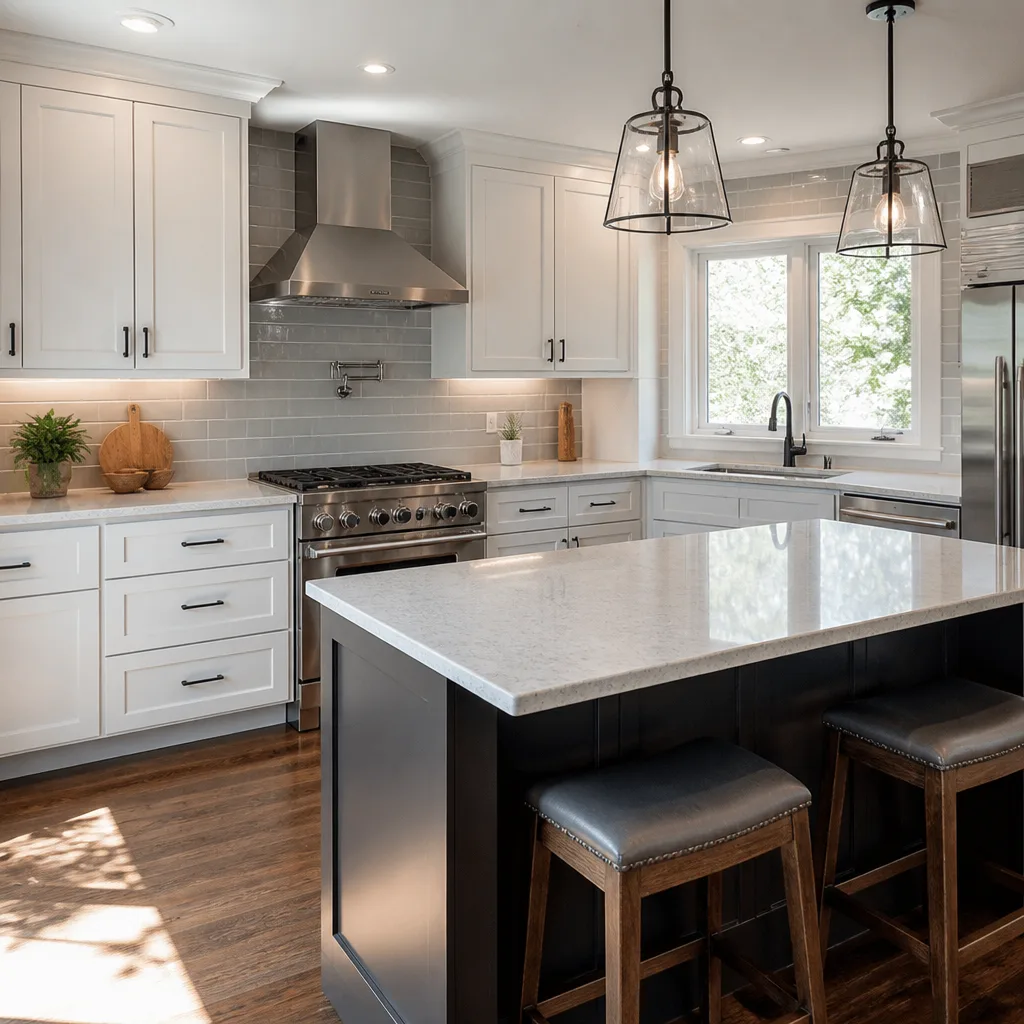
James Hardie kitchen remodeling in Campbell typically runs $14,000-$45,000 for a full renovation with HardiePanel or HardieBacker cement board installed behind tile and in moisture zones, with smaller refreshes starting around $9,000. We stock James Hardie cement board and fiber cement trim on our Campbell trucks, and most kitchen projects start within two weeks of the written quote. Campbell homeowners usually discover their existing substrate has failed when tile cracks behind the range, grout pops in the backsplash, or they pull cabinets and find swollen drywall that never should have been there in the first place.
Which James Hardie Models This Applies To
We specify three James Hardie products for Campbell kitchens, and matching the right board to the application matters more than most contractors admit.
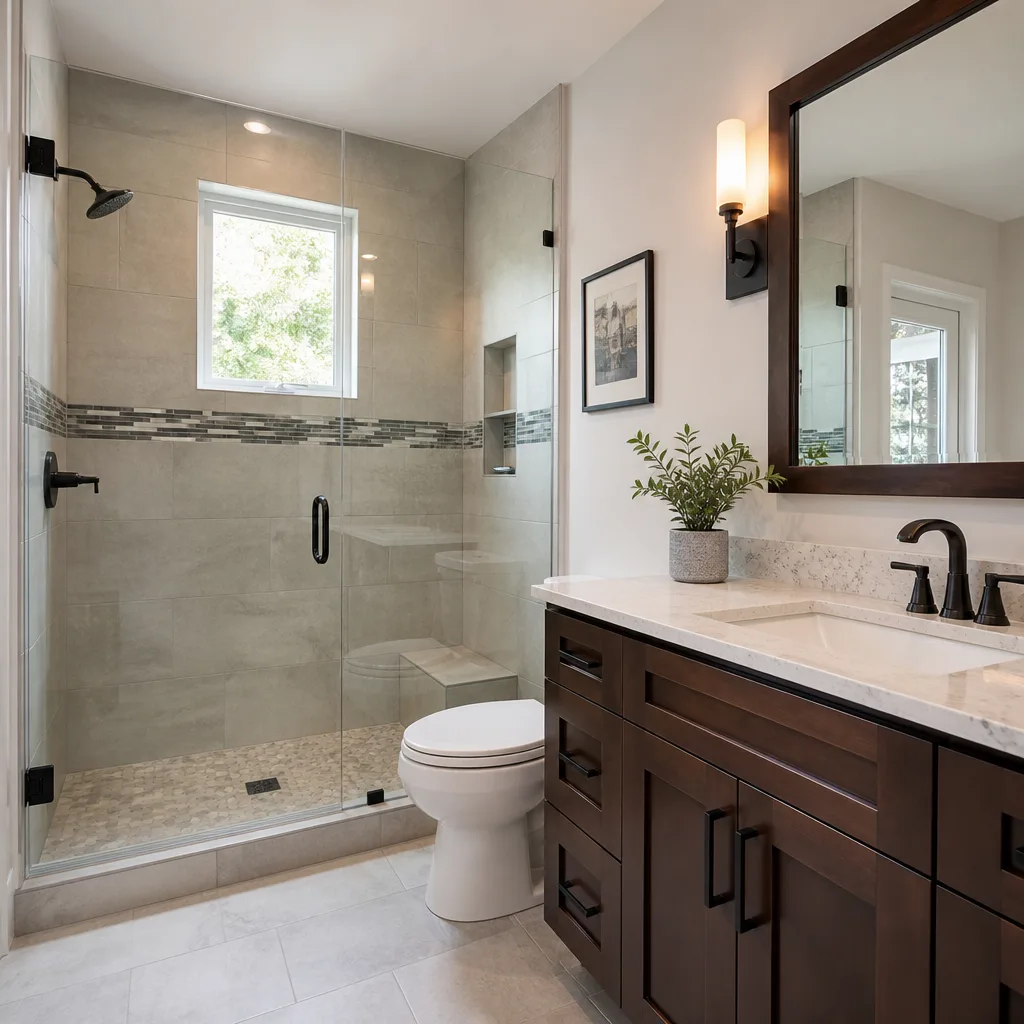
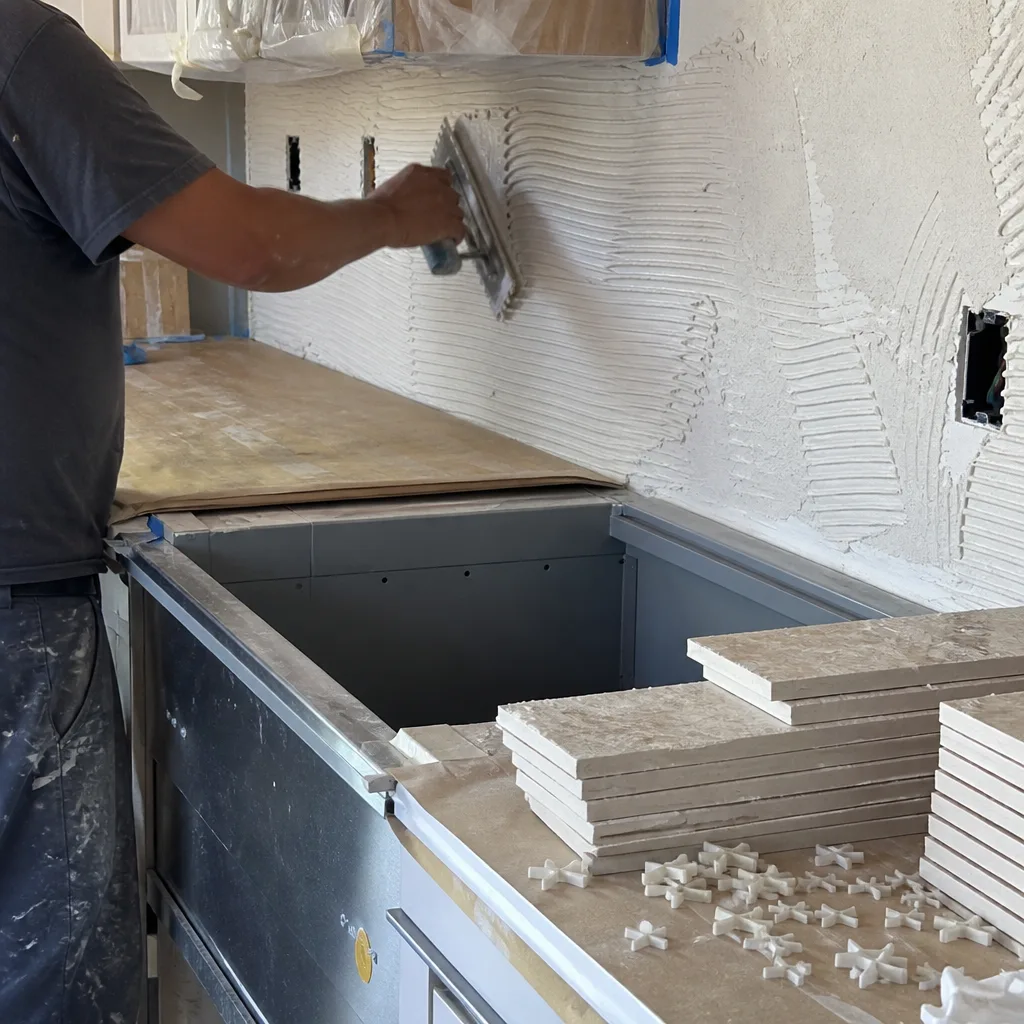
HardieBacker 500 is the 1/2-inch cement board we use behind kitchen tile backsplashes and under floor tile. It carries a 0.50 perm rating, which means it blocks liquid water but lets vapor escape - critical in Campbell’s older ranch homes where slab foundations can wick moisture upward. The board is stamped with a lot number and thickness on the back face; if you’re checking what a previous installer used, that’s where to look.
HardieBacker 1/4-inch is thinner, lighter, and only appropriate for floor installations over plywood subfloors of 5/8-inch or greater. We’ve found it misapplied as a wall substrate in three Campbell kitchens this past year, always because a previous contractor wanted to save weight and skipped the spec sheet.
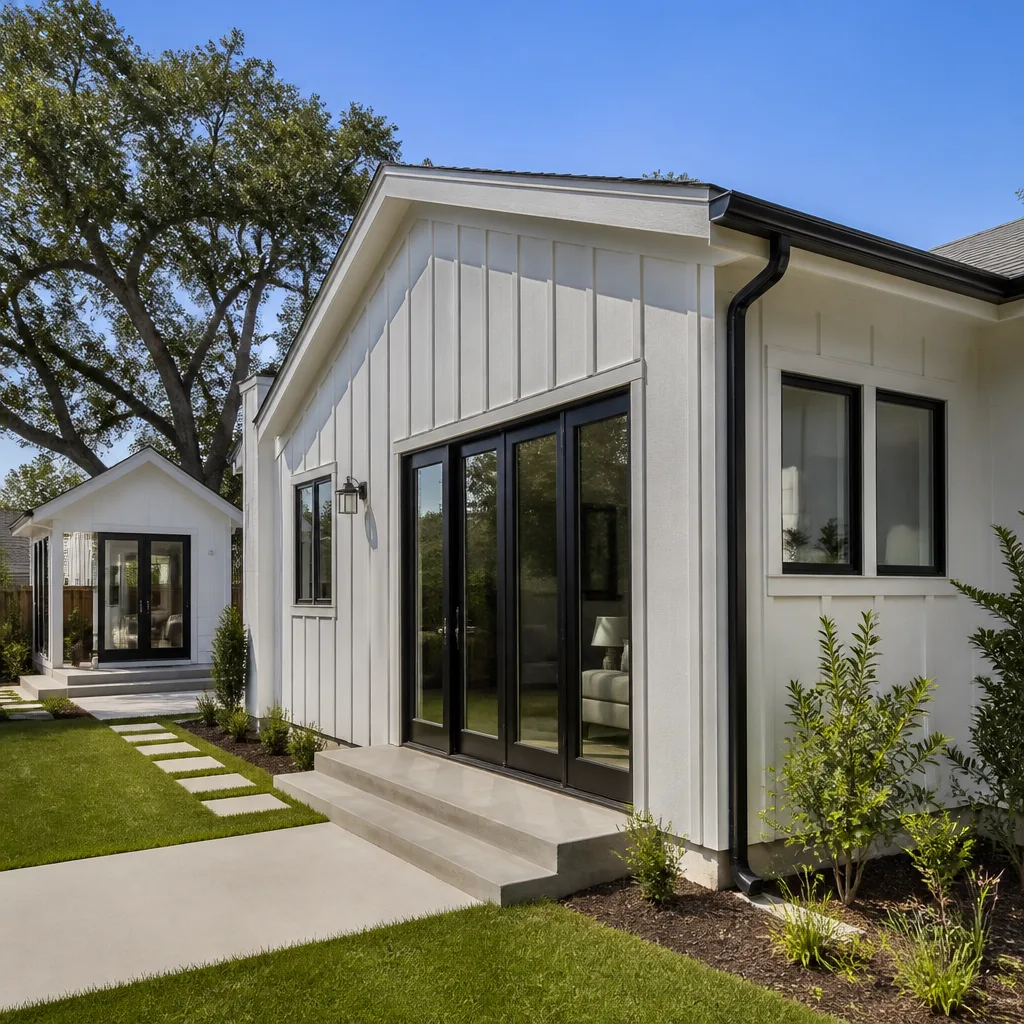
HardiePanel is the vertical fiber cement siding we use for exterior kitchen bump-outs and ADU kitchen walls where the structure needs fire resistance and a stucco or wood-panel finish. Campbell’s wildland-urban interface zones, particularly north of Hamilton Avenue, increasingly require non-combustible exterior sheathing, and HardiePanel meets that code without the cost of stucco base coat assemblies.
OEM James Hardie is what we quote first. There are aftermarket cement boards (CertainTeed, USG Durock) that perform similarly, but Hardie’s formulation includes a proprietary mold inhibitor that matters in Campbell’s winter damp periods when kitchen ventilation runs low. For warranty continuity, we document the product lot on every invoice.
Signs Your James Hardie Kitchen Remodeling Is Failing
- Tile cracks in a straight line behind the cooktop. This usually means the previous installer used drywall instead of cement board, and the heat cycling has degraded the paper facing. The substrate flexes, the thinset loses bond, and the tile follows the stress fracture. In Campbell’s post-war tract homes near San Tomas Aquino Creek, we’ve seen this exact pattern in six kitchens built between 1955 and 1972.
- Grout turns powdery and falls out in the backsplash. Moisture is reaching the substrate through failed caulk at the counter-to-wall joint. If the backing is standard drywall, it’s softening; if it’s HardieBacker, the board itself is intact but the installation skipped the recommended alkali-resistant mesh tape at seams. The fix is removal, proper taping, and re-tile - not just re-grouting.
- Cabinets smell musty when you open the sink base. The plumbing wall behind the sink should be HardieBacker or equivalent cement board, not greenboard or drywall. Campbell’s water is moderately hard, and slow drips from compression fittings find their way to paper-faced products. We pull the sink, check the substrate with a moisture meter, and document what we find with photos.
- Floor tile sounds hollow when you tap it. This indicates thinset failure, often from a subfloor that flexes more than the L/360 standard cement board requires. In Campbell’s Eichler and similar slab-on-grade homes, we’ve measured deflection at L/240 - too much for 1/4-inch HardieBacker without additional plywood underlayment.
- Exterior kitchen wall shows bubbling paint or efflorescence. If the bump-out was sheathed with OSB or plywood instead of fiber cement, Campbell’s winter rains and summer irrigation overspray eventually saturate the substrate. HardiePanel with proper rain-screen detailing prevents this; we see the failure most often on additions built in the 1980s without moisture management.
 Before
 After
AfterReplacement Cost & What’s Included
| Scope | Campbell Price Range |
|---|---|
| Full kitchen remodel with HardieBacker substrate | $14,000 - $45,000 |
| Small kitchen refresh (cabinets, counters, backsplash) | $9,000 - $20,000 |
| Backsplash-only replacement with HardieBacker install | $800 - $2,500 |
| Countertop replacement (Cambria, Silestone, or similar) | $2,000 - $6,500 |
| Cabinet installation (KraftMaid, Wellborn, or equivalent) | $4,000 - $13,000 |
| Kitchen island addition or rebuild | $3,000 - $10,000 |
What drives the range: cabinet grade and box construction, countertop material thickness and edge detail, whether plumbing or electrical needs relocation, and the condition of existing substrate we find when demolition starts. We quote a flat price before work begins, with line-item documentation. Under Clause 1 of The Haven Standard, that written price does not change without a signed change order - the discipline that has kept our projects within a few percent of the agreed number across 4,000-plus jobs since 2007. Our 365-Day Done Right Promise covers the workmanship; manufacturer warranties cover the materials.
DIY or Call Us?
What a Campbell homeowner can safely check: confirm the product stamp on existing cement board (HardieBacker is blue, Durock is gray, and the thickness matters), look for obvious water staining at cabinet bases, and tap floor tile with a coin to listen for hollow spots. These checks cost nothing and tell you whether the previous installation followed basic protocol.
Where DIY goes wrong: cutting fiber cement or cement board without a HEPA vacuum and respirable crystalline silica protection, which is a genuine health hazard and an OSHA-regulated exposure. We use Makita or Festool track saws with dust collection on every Campbell job. Second, improper fastening - HardieBacker requires specific screw patterns and alkali-resistant tape at seams, and skipping either voids the warranty and causes the exact failures we described above. Third, substrate deflection calculations; most homeowners don’t own a laser level or know how to measure span ratings.
We’re an independent service provider - not affiliated with James Hardie - and we carry no obligation to push one brand over another. We stock HardieBacker because the specification is honest and the local supply chain is reliable. Call (831) 704-1211 to schedule your free estimate. We’ll walk the job, show you what we find, and put the number in writing before anyone picks up a tool.
FAQs
Properly installed HardieBacker cement board lasts the life of the tile installation - typically 20 to 40 years in Campbell’s climate, which lacks the freeze-thaw cycling that degrades substrates faster inland. The board itself does not deteriorate; failure almost always traces to improper installation, moisture intrusion from failed grout or caulk, or structural movement the substrate was never designed to accommodate. Call (831) 704-1211 for an exact quote - estimates are free.
Localized damage can be cut out and patched with new cement board using the proper seam tape and thinset, but only if the surrounding installation was correct to begin with. We find that partial repairs often fail because the original job skipped fastening patterns or used drywall screws instead of the specified cement board fasteners. We document the condition with photos and quote both options. Call (831) 704-1211 for an exact quote - estimates are free.
Removing old substrate, installing new HardieBacker with proper fastening and seam treatment, and preparing for tile typically takes one to two days for a standard Campbell kitchen backsplash and two to three days for full floor and wall prep in a medium-sized kitchen. This assumes no hidden plumbing or electrical relocation; if we find that, we stop, photograph, and present a signed change order before continuing. Call (831) 704-1211 for an exact quote - estimates are free.
We stock 1/2-inch and 1/4-inch HardieBacker, alkali-resistant mesh tape, and the specified corrosion-resistant screws on every kitchen remodeling truck. HardiePanel for exterior applications is job-ordered to the lot number for warranty traceability. For KraftMaid and Wellborn cabinets, Cambria and Silestone countertops, and other brands in our fifty-plus vetted list, we maintain supplier relationships that keep lead times honest and pricing documented. Call (831) 704-1211 for an exact quote - estimates are free.
Grant Rowan still keeps a legal pad on his truck dash, and the crew knows that “measure twice, document once, build it right” isn’t a slogan - it’s the reason we pull permits correctly the first time and why customers in Campbell and the Silicon Valley foothills get a photo record of every visit without asking.
Written by Grant Rowan, Owner, Rowan Construction Group Campbell at Rowan Construction Group Campbell, serving Campbell and nearby areas.