
Free written scope consultation - allowances, timeline, and change-order rules on paper before a single trade is scheduled
 Before
 After
After Before
 After
After Before
 After
AfterAbodu Home Additions & ADU: The Campbell Owner’s Guide
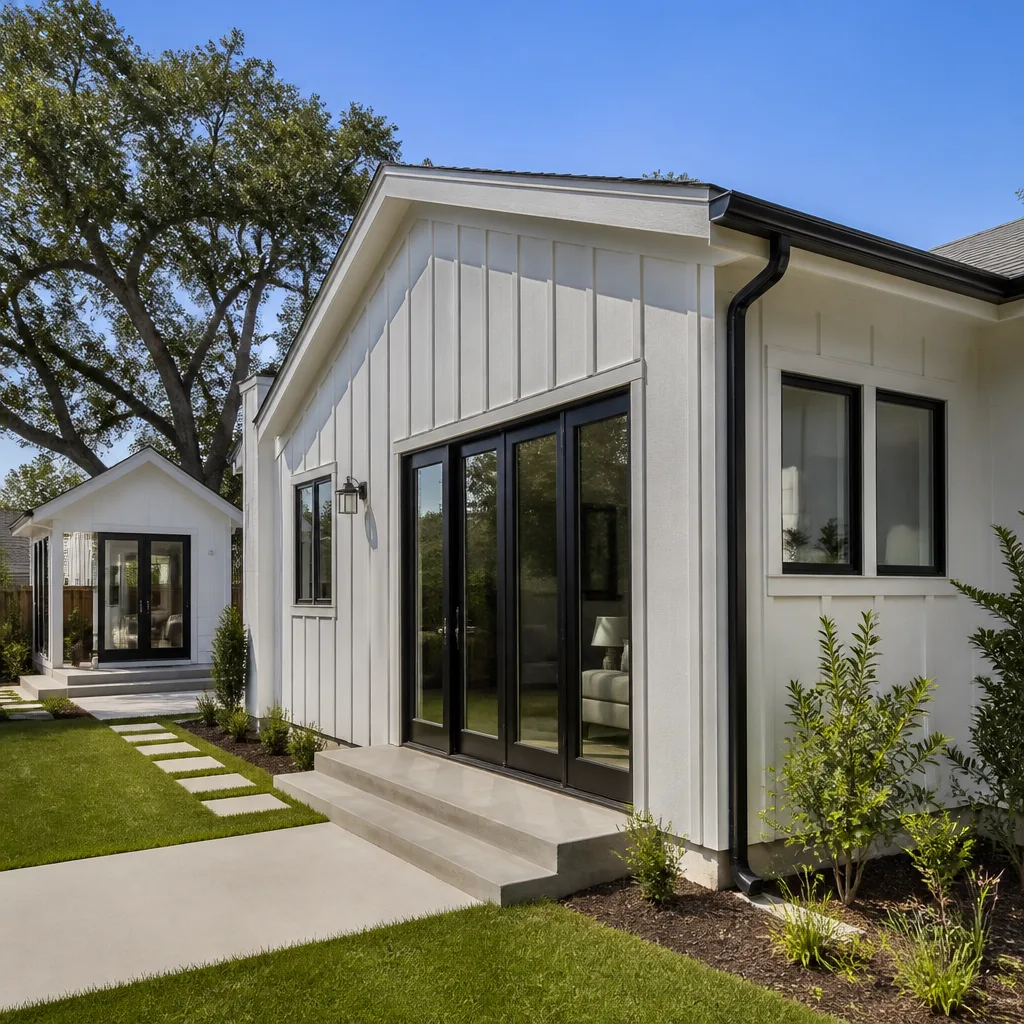
We stock and install Abodu-compatible components for home additions and ADUs in Campbell, with typical installed pricing from $45,000 to $130,000 depending on scope and foundation requirements. Most Campbell homeowners who contact us about an Abodu unit have noticed a structural or systems issue during seasonal inspection, or they’ve pulled a permit for a modification and discovered the existing connection doesn’t meet current Campbell building code. Campbell’s clay-heavy soil and the seasonal expansion-contraction cycle near the Los Gatos Creek watershed put particular stress on foundation tie-ins and utility junctions that were installed even five years ago.
Which Abodu Models This Applies To
Abodu has shipped three primary product lines into the South Bay since 2019: the original Abodu One (single-bedroom, 340-500 sq ft), the Abodu Two (two-bedroom, 500-610 sq ft), and the Duet series (modular paired units, 800-1,200 sq ft combined). The identifying label is a metal data plate on the electrical panel door, or a QR code sticker on the HVAC cabinet, which will show the manufacturing quarter and the specific sub-model, for example A1-SJ-2021-Q3.
The critical compatibility issue in Campbell is the foundation connection system. Early Abodu One units shipped with a standard pier-and-grade-beam spec that works fine in stable soils but struggles in the expansive clay common west of Highway 17. Abodu revised this in late 2021 to a helical-pier option with a floating slab detail. If your data plate shows Q2 2021 or earlier and you’re seeing cracks in the interior drywall near the utility chase, you likely have the original foundation spec. We carry both the OEM retrofit bracket kit from Abodu’s supply chain and an engineered equivalent from Simpson Strong-Tie that Campbell’s building department has pre-approved, which saves roughly two weeks on permit review. Rowan Construction Group Campbell is an independent service provider, not affiliated with Abodu.
Signs Your Abodu Home Addition or ADU Is Failing
- Drywall cracks radiating from the utility chase or corner joints. Campbell’s clay soil swells in winter and shrinks in summer; if the helical piers weren’t torqued to the correct spec for your soil class, the unit settles differentially and the rigid interior finish cracks first. We see this most often in the neighborhoods near the Pruneyard, where the cut-and-fill grading from the 1970s created inconsistent soil density.
- Water pooling in the crawl space or perimeter drainage channel. Abodu units ship with a perimeter French drain, but the outlet line is often stubbed too shallow for Campbell’s occasional hard rain events. The drain clogs with sediment, hydrostatic pressure builds, and the pressure-treated sill plate begins to wick moisture.
- HVAC short-cycling or inability to hold temperature. The Mitsubishi or Daikin mini-split spec’d for your square footage can fail prematurely if the unit’s envelope wasn’t sealed correctly at the roof-wall junction. Campbell’s afternoon sun load on west-facing units exaggerates the problem.
- Electrical panel humming or breaker trips under normal load. Early Abodu units used a 100-amp subpanel feed that meets code but leaves no margin for electric vehicle charging or heat-pump water heaters, both common upgrades in Campbell. The bus bars overheat and the breakers weaken.
- Exterior siding gaps or trim separation at the roofline. Abodu’s panelized siding system relies on a hidden fastener clip; if the clip wasn’t set with the correct pneumatic pressure, thermal expansion works the panel loose. Campbell’s 40-degree winter lows to 95-degree summer highs create more movement than the coastal spec anticipated.
 Before
 After
AfterReplacement Cost & What’s Included
For a full Abodu ADU foundation stabilization and reconnection in Campbell, expect $45,000 to $130,000 installed. The range depends on three factors: whether we can retrofit the existing piers or must install new helicals to a deeper torque spec; whether Campbell requires a full geotechnical report (triggered if the original soils data is missing); and whether the utility trenching needs to be redone to current PG&E and San Jose Water standards.
Our quote is a flat written price with a written scope, delivered before any work starts. Under Clause 1 of the Haven Standard, that number includes: permit pulling and inspection scheduling with Campbell’s building department; the documented photo record of existing conditions; all parts and materials from our vetted supply chain; and the 365-Day Done Right Promise. No change proceeds without a signed change order, which is why our projects finish within a few percent of the agreed price. We also stock KraftMaid, Cambria, and Silestone for interior finish upgrades if the remediation exposes the living space.
DIY or Call Us?
There’s a safe middle ground and a hard stop. A homeowner can check the data plate, photograph any cracks with a ruler for scale, and verify whether the perimeter drain outlet is flowing after a rain. What you should not attempt: torque-testing helical piers (the equipment requires certification and the torque spec is load-calculated per pier), modifying the electrical subpanel (Campbell requires a permit and a licensed electrician for any service upgrade), or cutting the siding to inspect the clip system (this voids Abodu’s weatherization warranty and creates an immediate water intrusion risk).
We’ve walked into three Campbell jobs this year where a well-intentioned owner started with a caulk gun and ended up needing a $12,000 envelope rebuild. Measure twice, document once, build it right. If you’re seeing any of the symptoms above, call (831) 704-1211 and we’ll schedule a free estimate with a written line-item quote.
FAQs
Most projects run 3 to 5 weeks from permit approval to final inspection, assuming Campbell’s building department has a standard 10-day review cycle. Geotechnical delays or PG&E trench inspections can add 2 weeks. Call (831) 704-1211 for a timeline based on your specific address and permit history, estimates are free.
We’ve never had to replace an entire Abodu unit in Campbell; the panelized construction allows targeted remediation of the foundation, envelope, or systems independently. The exception is if moisture has compromised the structural sill plate for more than 18 months, which requires partial disassembly. Call (831) 704-1211 and we’ll assess whether you’re looking at a $8,000 pier retrofit or a $40,000 partial rebuild.
We stock the Simpson Strong-Tie retrofit brackets, the upgraded drainage components, and the common HVAC electrical whips on our Campbell truck. Abodu-specific trim clips and the Q2 2021-and-earlier foundation bracket must be ordered, typically 5 to 7 business days. We order during the permit review period so no time is lost once Campbell approves the scope.
A helical-pier retrofit to the post-2021 spec, properly torqued and locked off, should outlast the 50-year structural design life of the unit itself. The key variable is the drainage: if the perimeter system is maintained clear, the piers don’t move. In Campbell’s climate, with our wet winters and dry summers, we recommend inspecting the drain outlet annually and after any earthquake over magnitude 4.0.
Written by Grant Rowan, Owner, Rowan Construction Group Campbell at Rowan Construction Group Campbell, serving Campbell and nearby areas.